How Kenyans Abroad Can Get a Certificate of Good Conduct
If you live outside Kenya and need a Certificate of Good Conduct for a visa, a job, a residency application or professional registration, you do not need to book a flight home. The certificate, also known as a Police Clearance Certificate (PCC), can be applied for online, with fingerprinting done at a Kenyan embassy, High Commission or consulate.
The process involves applying and paying through eCitizen, getting your fingerprints taken at a Kenyan mission and waiting for the DCI to process the application. Once the certificate of good conduct is ready, you can download it through your eCitizen account.
Here is how the process works from start to finish.
Step-by-Step: Applying From Outside Kenya
1. Log in to eCitizen
Sign in to your eCitizen account, or register one if you do not have an account. Once logged in, open the Directorate of Criminal Investigations (DCI) services section and select the Certificate of Good Conduct application.
2. Fill in the form and upload your documents
Enter your personal details as they appear on your national ID or passport, and attach the supporting documents requested.
Check your details carefully before submitting the application. Names or ID details that do not match can cause delays and may require you to correct the information before the application can proceed.
3. Pay the fee Ksh. 1500
The total cost is KSh 1,050, made up of KSh 1,000 for the certificate and a KSh 50 eCitizen convenience fee.
You can pay through M-Pesa, a debit or credit card, or bank transfer.
4. Download and print your forms
After making the payment, download the application forms generated by the system and print them. These include the C24 fingerprint form, which you will need when you have your fingerprints taken.
5. Get your fingerprints taken at a Kenyan mission
Contact the nearest Kenyan embassy, High Commission or consulate and ask about booking a fingerprinting appointment.
Do this early because some missions only handle fingerprinting on certain days. For your appointment, bring your national ID or passport, a passport-size photograph, the printed application forms and proof of payment.
6. Wait for the DCI to process your application
After your fingerprints are taken, the mission sends them to Kenya through the Ministry of Foreign and Diaspora Affairs.
The DCI’s Forensic Fingerprint Identification Bureau then analyses the fingerprints and processes the application before the certificate is issued.
7. Download the certificate
Once the certificate is ready, it appears in your eCitizen account. You can download it and print a copy for your records or use it for the application that requires it.
The DCI has summed up the service for Kenyans abroad in a simple message: “Get your Police Clearance Certificate, even while abroad!”
How Long It Takes and How Long It Lasts
Applications handled through Kenyan missions abroad usually take between four and eight weeks. This is longer than the roughly two to four weeks quoted for applications made inside Kenya because the fingerprints have to travel through diplomatic channels before the DCI can process them.
The actual timeline can also vary depending on the number of applications being handled by a particular mission.
If you need the certificate for a deadline, such as a visa appointment or job start date, apply at least two months in advance.
Once issued, the certificate is valid for twelve months. If it expires before you use it, you will need to repeat the application process, including having your fingerprints taken again.
Common Problems and How to Avoid Them
OTP verification without a Kenyan number
eCitizen sends a one-time password (OTP) to a Kenyan mobile number. If you no longer use your Kenyan line, you can temporarily use a relative’s number to receive the code, or contact eCitizen support and ask about other verification options.
It is better to sort this out before starting the application because you may need the same number to log in again later.
Poor-quality fingerprints
Fingerprints that are smudged or unclear may have to be retaken, which can add more time to the process.
Wash and dry your hands before the appointment and follow the officer’s instructions during fingerprint capture.
Mission-specific rules
Requirements can differ from one Kenyan mission to another. This can include appointment procedures, fingerprinting days and the documents you need to bring.
Call or email the mission before your appointment so you know what to expect and do not arrive without a required document.
Details that do not match
Make sure the information on your eCitizen profile matches your national ID or passport.
If the details do not match, correct them before submitting the application. Fixing errors after submission can slow down the process.
Foreign Nationals Who Previously Lived in Kenya
You do not have to be a Kenyan citizen to apply for a Certificate of Good Conduct.
Foreign nationals who previously lived in Kenya and are now abroad can use the same process, but they must also provide proof of their former immigration status in Kenya. This can include a work permit, dependant pass, diplomatic card or student pass.
The certificate is then issued with remarks that reflect the applicant’s status.
Quick Checklist
Before starting your application, make sure you have:
An active eCitizen account and a Kenyan phone number for OTP verification
KSh 1,050 for the application fee
Your national ID or passport
A passport-size photograph
The printed application forms, including the C24 fingerprint form
Proof of payment
A confirmed fingerprinting appointment at your nearest Kenyan mission
About four to eight weeks of lead time
Starting the online application and contacting your Kenyan mission on the same day is the simplest way to avoid delays. With your paperwork ready, you can complete the online application from abroad and have your fingerprints taken at a Kenyan mission.
Instagram’s view once feature lets you send disappearing photos that vanish after being opened , meaning once you view and leave, the photo disapears. Works just like Whatsapp’s disapearing photos.The feature is built right into your DMs.
It’s perfect for sharing quick moments, sensitive info, or just keeping your chats clutter-free.
But Instagram’s interface shifts constantly. New updates roll out in waves, layouts differ by region, and what worked six months ago can look completely different today. So if you’re staring at your DMs wondering how to send a disappearing photo on Instagram, remember this, you’re not alone and you havent missed much.
Here’s exactly how to do it.
How to Send an Instagram View Once Photo (Step-by-Step)
Before anything else, know this: the biggest mistake beginners make is trying to send a view once photo through the regular text box or the gallery attachment button. That won’t work. You need to use the dedicated DM camera. Here’s the full process:
Step 1: Open Instagram DMs Tap the paper airplane or Messenger icon in the top-right corner of your feed. Open the conversation with the person you want to send the photo to.
Step 2: Tap the Blue Camera Icon This is the critical step. Do not tap the text field or the image attachment icon. Look for the blue camera icon on the bottom-left of the chat screen and tap that. This opens Instagram’s built-in DM camera — the only place where the View Once option actually lives.
Step 3: Take or Select Your Photo Snap a new photo directly in the camera. Or, if you want to use something already on your phone, swipe up to pull from your camera roll.
Step 4: Toggle to “View Once” At the bottom of the screen, you’ll see playback options — typically icons representing how many times the recipient can replay the photo. Swipe or tap through until View Once is highlighted. This tells Instagram the photo should disappear permanently after the recipient opens it once.
Step 5: Hit Send Tap the send button. That’s it. Once your recipient opens the photo, it’s gone — no replays, no saving.
Before you send that next disappearing snap, make sure it actually looks good. Taking a few minutes to master your photography composition skills can completely transform an ordinary smartphone shot into something memorable.
A Quick Note on “Instants” and Layout Differences
If your screen doesn’t look exactly like what’s described above, don’t panic. Instagram has been rolling out a redesigned format called Instants — a new stacked layout for disappearing media in DMs. Depending on your region and app version, the interface may look slightly different. Kenyan users especially may notice version differences since Instagram rolls out updates gradually across markets.
The core logic stays the same: use the blue camera icon, not the gallery tool, and find the View Once toggle before sending. The labels or icons might shift, but the feature is still there.
Privacy FAQ: Can You Screenshot an Instagram View Once Photo?
This is the question everyone actually wants answered.
Technically, yes — but Instagram will notify you.
Instagram does send a screenshot notification to the sender when someone screenshots a view once photo. You’ll see a small alert appear in the chat letting you know the recipient captured your image. Instagram doesn’t fully block screenshots the way Snapchat attempts to, but the notification acts as a transparency mechanism — most people will think twice knowing you’ll find out.
That said, on some devices and certain iOS versions, screen recording can bypass the notification system entirely. It’s a known limitation. So while the instagram view once photo feature works well for casual privacy — sending something you don’t want lingering in a chat — it’s not a bulletproof privacy tool.
Bottom line: don’t send anything through View Once that you’d be seriously uncomfortable with someone saving. The feature adds a layer of friction, not an impenetrable wall.
Why Use View Once Photos?
This feature is genuinely handy beyond just privacy. Sometimes you want to share something temporarily without clogging up someone’s message thread — a quick screenshot of something funny, a candid selfie, or directions you don’t need them to keep.
It’s also great for storage. Regular photos and videos stay in DMs indefinitely unless manually deleted. View Once content clears itself automatically, which keeps both sides of the conversation tidy without anyone having to think about it.
For casual everyday use, it works perfectly fine. Just don’t rely on it as your main line of defence for anything truly sensitive.
Final Tips Before You Send
A few things worth knowing before you start using this regularly:
The photo can only be opened once. After that, it disappears from both sides of the conversation — no replay option, no recovery.
If the recipient hasn’t opened it yet, it stays in the chat until they do — but they’ll only ever get that one view.
This feature only works in Direct Messages, not in Instagram Stories or posts. If you want disappearing content on your profile, you’ll need Stories with the standard 24-hour timer instead.
The Short Version
If you want to know how to send a one time view picture on IG: open a DM, tap the blue camera icon (not the gallery button), take or choose your photo, select View Once, and send. That’s the whole process. It works consistently across iOS and Android — just make sure you’re using the right camera entry point, and you won’t run into any issues.
You’ve got a decent camera. You understand exposure. But something about your photos still feels… off. More often than not, the culprit isn’t your gear — it’s composition. The good news? These mistakes are easy to spot once you know what to look for, and even easier to fix. Here are ten composition habits that might be holding your photos back.
1. Putting the subject dead-centre every time
The rule of thirds exists for a reason. Placing your subject slightly off-centre creates visual tension and a more natural, engaging image. Try positioning eyes, horizons, or focal points along the grid lines instead.
2. A cluttered, busy background
Your background is working either for you or against you — there’s no neutral. Before you shoot, scan the whole frame. Distracting elements behind your subject? Move your feet, change your angle, or open up your aperture.
3. Cutting off limbs at the joints
Cropping someone at the wrist, ankle, or knee looks awkward and unintentional. If you need to crop a person, do it between joints — mid-forearm, mid-shin, mid-thigh.
4. A horizon that’s not actually horizontal
A tilted horizon is one of the most common and most fixable mistakes in photography. Use your camera’s built-in level (most have one), or spend 10 seconds straightening in post.
5. No clear subject
Ask yourself: what is this photo of? If the answer is vague, your viewer won’t know where to look. Every strong image has a clear visual anchor. Find yours before you press the shutter.
6. Not using leading lines
Roads, fences, rivers, staircases — these are gifts. Leading lines pull the viewer’s eye into the frame and give your image depth and direction. Look for them in every scene.
7. Shooting everything from eye level
Eye level is comfortable, but it’s also predictable. Get low and shoot upward for drama. Get high and shoot down for context. Even a small change in angle can transform a photo entirely.
8. Ignoring negative space
Empty space isn’t wasted space. Negative space gives your subject room to breathe and can make an image feel calm, deliberate, and modern. Don’t feel compelled to fill every corner of the frame.
9. Merging edges — where your subject “touches” the background
When a tree, pole, or wall appears to grow out of someone’s head, it’s called a merge — and it’s distracting. Check your edges before shooting and adjust your position to separate the subject from the background.
10. Forgetting to simplify
The best compositions usually have one thing to say. Before you shoot, ask: what can I remove from this frame? Great composition is often about subtraction, not addition.
The great thing about composition is that it costs nothing and improves everything. You don’t need a new lens or a camera upgrade — just a more intentional eye. Whether you’re shooting weddings or building your photography business, pick one of these to focus on during your next shoot and see what a difference it makes.
A Brazilian Song Is Going Viral on TikTok. The Lyrics Are Leaving People Speechless
A Brazilian song is taking TikTok by storm, and the reason might surprise you, it’s the lyrics.
An AI-generated, 1980s-style reinterpretation of “Predador de Perereca,” a 2015 funk hit by MC Jhey, has been circulating widely on the platform. The retro-flavored remix gives the track a fresh sonic makeover, and many users have been drawn in by its catchy melody.
The problem? Most people have no idea what they’re dancing to.
The original song contains extremely explicit lyrics in Portuguese, and many non-Brazilian listeners have been enjoying the tune without realizing the nature of the content. The trend took a comedic turn when people began filming their Brazilian friends and relatives listening to the song — capturing their wide-eyed, disbelieving reactions in real time.
The videos have racked up millions of views, with the reactions ranging from shocked laughter to outright disbelief.
It’s a reminder of how easily a catchy beat can travel across language and cultural barriers — and how much can get lost, or hidden, in translation.
AI Remix of Predador de Perereca Youtube
See English translation below
Verse
Espetacular o sorriso dessa princesa
The smile of this princess is spectacular
É de impressionar quando arrasto ela pra treta
It’s impressive when I take her to the mess
Não chama as amigas, só ela dá conta
She doesn’t call her friends, she can handle it by herself
A Research Proposal Submitted In Partial Fulfillment of the Requirements for the Award of the Degree of Master of Arts in Literature
ABSTRACT
In heroic poetry, or panegyric, the relationship among images seems also obscure at times. Some, in fact, refer to the images as melanges, so difficult is it to discern their relationships. The images are indeed connected; a discourse is initiated by the poet, and the panegyric assumes lyrical form. As in the lyric poems, the rhythm of the poetic performance, its single subject, the thematically designed boundaries, bind the diverse images. Of all African art forms, heroic poetry is the closest to history in its choice of images. It frequently concentrates on historical figures. The creator of such poetry usually ignores repertories of fantasy, selecting instead images of animals and land-forms to accompany the many historical allusions. Panegyric poetry examines heroic aspects of humans-positively, in the rush of pleasure in recounting the affairs in the lives of authentic culture heroes; negatively, in the comparison of the flawed contemporary leader with the great heroes of the past. While the raw material of this poetry is by and large realistic, it is history made discontinuous, then placed in novel frames. Within this new context, the hero is described, and then judged. It is in the measurement of the poem’s subject against the ideals of the society that the work has its metaphorical power. “While such poetry is not a historical rendering, it nevertheless has no existence outside history. Images, selected at least partially for their power to elicit strong feelings from an audience, are first removed from their mainly historical contexts,” as in the tales. “Certain emotions associated with such subjects as heroism and the kingship is intensified, and reordered. Because contemporary events are thus routinely measured against cultural values, history is constantly being revived and revised. The poems depend on this enhanced narrative, reproduced, atomized, and redefined. It is a subjective accounting, but the poet, using all his magic to convince his listeners otherwise, contains these as yet unchannelled bursts of energy and gives history a new gloss.”
CHAPTER ONE
1.1 BACKGROUND OF THE STUDY
Of all the poetic genres in Africa, panegyrics is the most elaborate and developed, for it goes with particular ethos, a stress on royal or aristocratic power and admiration of military achievement. Even non-centralized societies like Tuereg and Galla lay stress on significance of personal achievement in war and hunting. This therefore attests to the fact that praise names and songs are universal (Ruth Finnegan, 2012). Ruth Finnegan notes that panegyrics are directed to the living rather than to the spirits. This is however, an exception among Hausa of West Africa. Here, praises are directed to the supernatural beings. For instance, Hausa, Bori spirits each have their own praise songs (Taki, Kirari).When the spirit is called, its praise songs are played through one after the other until it takes possession of its worshippers (Smith 1957).
Praise songs are used for different occasions. They can be used to praise the bride and the bridegroom in weddings, successful candidates in an initiation ceremony and also to glorify people who have made some significant contribution to the society like leading their people in wars without betraying them. Akivaga and colleagues argued that, “A common characteristic of praise songs is the extensive use of metaphors, particularly comparison of people to animals, in order to highlight certain admirable qualities in those people”, Akivaga et al (1995:92).
This study focuses on imagery and symbolism in the Kipsigis panegyrics. These images and symbols may reflect the philosophy of life among the Kipsigis people and how they view heroism. This study will rely on the responses of the interviewees, the findings from my participation in the singing of praise songs and also careful and systematic search for symbols and images in the panegyrics collected.
The period of focus in collection of items is between 1900 up to date. To find the most suitable data for my project I picked on two sub counties in Bomet County known for their serious conservation of culture.
1.2 STATEMENT OF THE PROBLEM
The Kipsigis people attach great importance to individual and even communal achievements. They appreciate these achievements by either giving the achiever a praise name, ‘salaniat,’ or by showering them with praises therefore, the panegyrics capture these praises.
The literature of the Kipsigis is scanty. Works on songs specifically leave a lot to be desired; therefore much needs to be done. Earlier attempts made have focused on initiation songs, political songs and work songs. It is therefore essential at this point to look into the panegyrics which are rich in imagery and symbolism which may reflect what the members of the community hold dearly and adore.
This study sets off to explore the significance of the imagery and symbolism in the Kipsigis panegyrics. It seeks to relate these symbols and images with the philosophy of life among the Kipsigis people. These images are likely to be drawn from the environment.
Achievement is valued in human existence; therefore anybody who achieves is showered with praises. The panegyrics used to complement the achievers are usually symbolic and rich in images in form of metaphors, vivid description, similes and personification. These praises may aid in upholding integrity among those at the helm in the society and also encouraging those who aspire to take up leadership roles to work towards the same.
1.3 PURPOSE OF THE STUDY
The purpose of the study is to explore the significance of imagery and symbolism in the Kipsigis Panegyrics.
1.4 OBJECTIVES OF THE STUDY
The specific objectives of this study are to:
Identify imagery and symbolism in the Kipsigis panegyrics and their impact to the message.
Examine the key issues associated with power as raised by panegyrists in the Kipsigis panegyrics.
Analyze the philosophy of life among the Kipsigis people as presented through imagery and symbolism in the panegyrics.
Critique the impact of laudation on those at the helm of leadership as seen through the choice of symbols and images by the panegyrists in the Kipsigis panegyrics.
1.5 RESEARCH QUESTIONS
Are there images and symbols in the Kipsigis panegyrics?
Is the philosophy of life of the Kipsigis captured in the images and symbols found in the Kipsigis panegyrics?
What is the impact of laudation on those at the helm of power as seen in the symbols and images found in the Kipsigis panegyrics?
1.6 ASSUMPTIONS
The study assumes that:
The Kipsigis panegyrics contain imagery and symbolism.
The images and symbols in the Kipsigis panegyrics can help in understanding the Kipsigis philosophy of life.
The respondents shall cooperate and give information relevant to this study.
1.7 JUSTIFICATION OF THE STUDY
Heroism and hero worship occupy a central part in human existence. In classical Greece, panegyrics were delivered at national festivals or games. This delivery was geared towards arousing the citizens urge to emulate admirable deeds of their forebears. These songs contain imagery and symbolism associated with virtues which the Greeks hold so dearly. Examples of these songs are: Olympiacus of Georgias and Olympiaces ofLysias. Funeral orations such as The Famous Speech of the Pericles in Thucidides partook of the nature of panegyrics.
In the Roman Empire, panegyrics were confined to the living while the funeral orations were reserved for the dead. An example of the Latin panegyrics is the one delivered by younger Pliny (AD 100) in the senate on the occasion of his assumption of consulship. It contained images associated with Trajan civilization.
The custom of panegyrics addressed to monarchs was revived in the Baraque period. The same exists in the renaissance period for example Erasmus’ Panegyricus which was first published in 1504. Several scholars have conducted studies on the general composition and impact of praise songs to their target audience. But they have failed to explore details such as the stylistic devices used in the songs and their impact.
In 1660, panegyrics were published by English poets in honor of Charles II of England. Other significant works include: The panegyrics of the Duke of Lerma by Louis De Gongora (Spanish poet) of 1617. The use of praise names is nearly universal. Some individuals have several of these names so that a collection of them, recited together, resembles a loosely constructed poem. Among the Hausa, every celebrated man has his own praise name. The Yoruba people also have praise names, Oriki, which are permanent titles, held by individuals.
Although panegyerics have common features across all cultures, there is a difference in the way cultures use imagery and symbolism while composing their praise songs. Basing on the existing studies on the use of imagery and symbolism in panegyrecs, no studies have been conducted to specifically explore the use of imagery and symbolism in Kipsigis panegyrics. In this study, I therefore engage in careful and systematic search for symbols and images in the Kipsigis panegyrics.
1.8 SIGNIFICANCE OF THE STUDY
This study seeks to bring in the Kipsigis panegyrics at the center of scholarly eyes. In particular, it seeks to expose the literary worth of the same. By identifying and analyzing the imagery and symbolism eminent in the collected panegyrics, this research then excites the scholarly thirst on the Kipsigis panegyrics. The study also seeks to bridge the existing literary gaps in the study of panegyrics. This is in cognizance of earlier studies on the panegyrics of the Samburu people of Kenya by Wachira James. Research on imagery has also been focusing on other oral poems other than panegyrics. These include: Dominic Kipkoech’s, Images of Environment in the Kipsigis ‘TUMDO’ songs and Mukabi Kabira’s, Images of Women in Gikuyu Oral Narratives. This study will also add into the bank of knowledge of Oral Literature lovers. This will be of great importance to those studying oral literature and those teaching the subject.
The focus on the effect of laudation as shown by the choice of symbols and images will go a long way in shaping leadership in the human society. This study will also assist in educating the current generation, which might have lost touch with their culture, on the details of their traditions. The study will also impart new knowledge to the current and upcoming Kipsigis that will be instrumental in enhancing their creativity during the process of composing songs.
1.9 SCOPE OF THE STUDY
This study will be conducted in two sub-counties one of the counties in the South Rift. The sub counties include Chepalungu and Bomet Central both in Bomet County. The two locations have been chosen since they are still popular for carrying out various traditional activities and some old men and women who were soloists and dancers of the praise songs are still alive.
The study will collection of the required data will be done within a month and the collected information shall be categorized and analyzed within a period of one month. The conclusion and recommendations part will be done within a week after which the project will be ready for submission.
1.10 LIMITATIONS OF THE STUDY
Limitations are the factors that are likely to present challenges in the study. There are some limitations facing this study. For instance, the sources of information will be limited to counties occupied by the Kipsigis community. Wider Kipsigis’ oral Literature but it is restricted to identification, examination, analysis and assessment of the images and symbols found in the Kipsigis panegyrics.
The study is also restricted to the use of interviewing, observation, participation and systemic analysis of images and symbols found in the collected Kipsigis panegyrics. Performance aspect though recognized is beyond the scope of this study and is only referred to when it informs the conceptualization of the genre.This study does not consider the grammar and syntax for it puts into consideration the presence of freedom guaranteed by poetic license.
1.11 THEORETICAL FRAMEWORK
Theories are formal set of ideas intended to explain what happen or why it exist. In mass communication we have different types of theories based on different scholars. This study uses two theories to advance its objectives. These theories include sociological theory and functionalism theory.
1.11.1 Sociological Theory
Sociological theory posits that songs and dances are interpreted from its social function of storing and transmitting the values of that society. Songs are the mirror of society that produces it. On the other hand, society is the foundation upon which songs are created (Ngugi 1972).Songs and societies are indispensable and indeed interdependent. Scholars in this school of thought argue that songs use words to express the society’s aspirations, hopes and fears. Rosenblant argues that music goes beyond mirroring society and argues that “music is itself integral part of a culture and has its own complex relationship to the rest of the cultural setting” (Davidson, et al 1978).The same sentiments are echoed by Albrecht (Davidson et al 1978) when he asserts that music could be viewed in three dimensions; reflection impact and social control. It is from this perspective that music aims at not only reflecting society, but also impacting and controlling it. Muleka (2007) concurs with Albrecht and further expounds that songs can be tri-dimensional , first as a reflection of society’s world view, secondly as a representation of that society’s values and lastly control on the way people behave in that society. Sociological theory is helpful in analyzing the identified images and symbols found in the collected Kipsigis panegyrics.
1.11.2 FUNCTIONALISM THEORY
Functionalism interprets each part of society in terms of how it contributes to the stability of the whole society. Society is more than the sum of its parts; rather, each part of society is functional for the stability of the whole. Durkheim actually envisioned society as an organism, and just like within an organism, each component plays a necessary part, but none can function alone, and one experiences a crisis or fails, other parts must adapt to fill the void in some way.
Within functionalist theory, the different parts of society are primarily composed of social institutions, each of which is designed to fill different needs, and each of which has particular consequences for the form and shape of society. The parts all depend on each other. The core institutions defined by sociology and which are important to understanding for this theory include family, government, economy, media, education, and religion. According to functionalism, an institution only exists because it serves a vital role in the functioning of society. If it no longer serves a role, an institution will die away. When new needs evolve or emerge, new institutions will be created to meet them.
Functionalism views oral poetry as an embodiment of beliefs, customs and rituals that need to be maintained. For functionalists, emphasis is on the idea that the purpose and the use of an object should bring out its shape and construction. The main proponents of functionalism are: Bronislow Malinowski, Radcliffe Brown and Emile Durkheim. According to Njoroge this theory emphasizes that in order to explain a social phenomenon; one must first discover the cause that produces it and the function that fulfills in total social activity. In the same vein, Miruka points out any cultural activity must have utilitarian value for its people. Functionalists see society as a stable entity perpetuated by various cultural activities. This theory places emphasis on the need to look for the causes of an aspect. As per Miruka functionalism is the most persistent theory in the study of oral literature. It in effect proposes absolutist way of looking at life as a construct maintained by selected immutable principles and perhaps processes that must be perpetuated.
The society is said to be dynamic rather than static. Miruka asserts that neo-functionalists Raymond Firth and Edmund Leech states that society is not a functional unity but there are always mitigating, “emergent conflicts.” From a sociological eye, conflict is a requisite for the normal functioning of the society. The consensus amidst conflict means that the society is in a functional disunity, a view held by structural functionalists (Miruka 136).
This study will utilize the functionalist theory to put together the unity exhibited by the panegyrics at the same time elements of disunity. Functionalism will also come in handy in the identification of images and symbols used in the Kipsigis panegyrics. Functionalism will also aid in the analysis of philosophy of life of the Kipsigis people as seen in the choice of images and symbols in the Kipsigis panegyrics.
CHAPTER TWO
2.1LITERATURE REVIEW
There is an unbroken continuity in African verbal art forms, from interacting oral genres to such literary productions as the novel and poetry. The strength of the oral tradition seems not to have abated; through three literary periods, a reciprocal linkage has worked these media into a unique art form against which potent influences from East and West have proved unequal. Vital to African literature is the relationship between the oral and written word; in seemingly insignificant interstices have flourished such shadowy literary figures as Egyptian scribes, Hausa and Swahili copyists and memorizers, and contemporary writers of popular novellas, all playing crucial transitional roles in their respective literatures. The oral tale is not “the childhood of fiction” (Macculloch, 1905), but the early literary traditions were beneficiaries of the oral genres, and there is no doubt that the epic and its hero are the predecessors of the African novel and its central character.
The African oral tradition distills the essences of human experiences, shaping them into rememberable, readily retrievable images of broad applicability with an extraordinary potential for eliciting emotional responses. These are removed from their historical contexts so that performers may recontextualize them in artistic forms. The oral arts, containing this sensory residue of past cultural life and the wisdom so engendered, constitute a medium for organizing, examining, and interpreting an audience’s experiences of the images of the present. The tradition is a venerable one. “When those of us in my generation awakened to earliest consciousness,” says a contemporary Xhosa storyteller, “we were born into a tradition that was already flourishing.”
Fragmented history is also frequently a part of African epic which treats both the acts of heroic characters who existed in fact and those who are fictional. The epics of Sunjata and Mwindo are respective examples. The effect is the same; in all other respects, they are similar. It is not historical veracity in the linear sense that determines epic, it is the insight into history and culture provided by this confluence of oral genres. Now, within a pretext or setting that makes possible the merging of various frequently unrelated tales, the metaphorical apparatus, the controlling mechanism found in the riddle and lyric, the proverb, and heroic poetry, coordinates this set of tales to form a larger narrative.
All of this centers on the character of the hero, and a gradual revelation of his frailty, uncertainties, torments: he often dies, falls, or is deeply troubled, in the process bringing the culture into a new dispensation often prefigured in his resurrection or coming into knowledge. The mythical transformation caused by the creator- gods and culture heroes is reproduced precisely in the acts and cyclical, tortured movements of the hero. While the tale is at the heart of epic, significant changes occur. The epic is a complex reshaping of the tale. Heroic poetry provides a grid, helping to organize the narratives and narrative-fragments that are transported into the epic framework; it also supplies the specific historical and geographical data for certain epics. What African epics owe to the tale tradition is not difficult to discern. Less obvious is the role that heroic poetry plays in their construction. The greater part of the Malagasy epic about Ibonia is composed of elaborate praise-names (Becker, 1939: 58-59).
Out of these praises grows a heroic cycle-Ibonia’s miraculous bird, his name- giving, his movement to manhood, his taking of a wife from a deadly rival, his struggle with his cultural enemies, his death. Weaving through the entirety of the actions of the epic is a panegyric pattern, providing the work’s primary structure. Like the tales, this epic dramatizes rites of passage, birth, puberty, marriage, death. Unlike the tale, Ibonia, in his struggles and the movement through the dense forest of praise-names, moves beyond the routine activities of earth-bound humans, and comes to stand for a fresh fulfillment of the rituals, especially of marriage, so that in the end, before his death, he announces his testament (Becker, 1939: 131). The epic of Ibonia thus comes to represent a shift in view regarding traditional rites of passage: the tale character unquestioningly undergoes the rituals, the epic hero alters them and gives their new forms permanence.
Studies on oral literature of the Kipsigis community are generally few and far apart. Pioneering studies have mainly been undertaken, not within literary, but historical and anthropological canons. Being a performed art, Literature relies significantly on situation. Orimoogunje (2011) argued that context “could be regarded as a phenomenon that describes how, when, where, to whom and by whom the verbal arts under question are rendered”. This indeed shows that context as a key component in both the creation process and the actual delivery of oral genres.
Literature is synonymous to heightened language, sometimes with linguistic elements that have gained repeated, even conventional use. This attests to the fact that literary texts including panegyrics contain heightened language in form of imagery. In Africa, praise poetry served as a form of oral documentation. Professional poets carry and recall the narratives detailing the history of the people, the great leaders and their outstanding achievements. It is not unusual for African praise poetry to be performed accompanied by musical instruments. Panegyrics began typically as oral poems that were either sung or chanted. Panegyrists balance their descriptions of object of praise with some concrete examples of what they look like and how they act on the outside, with some abstract ideas about how they feel on the inside.
Praise songs are often directed to gods, animals, plants and towns that capture the essence of the object of praise. Professional bards, who may be both praise singers to the chief and court historians to their tribes, chant praise songs that contain imagery and symbolism. The bard is at liberty to make additions to the existing poems. Thus the praise songs of shango, the Yoruba god of thunder and lightning might contain a modern comparison of the god to the power and noise of the railway.
Among the Bantu-speaking people, the praise song is an important form of oral literature. The Sotho of Lesotho made compulsory to their initiates to create praise songs that set forth the ideals of actions and manhood. The worth of the praise songs is seen in the choice of metaphors. The TSwana of Botswana add women, tribal groups, domestic animals (especially cattle) and wild animals, trees, crops and various features of the landscape as subjects of their metaphors.
Kipury (1983) also notes that songs and poems are essential part of life to many communities in Kenya. There are rituals that are observed to the accompaniment of songs and dance. He further asserts that songs serve to embody the people’s philosophy, beliefs and values. This assertion is instrumental in studying imagery and symbolism in panegyrics so as to ascertain how they bring out the philosophy of the Kipsigis people. This argument was supported by Kabira and Mutahi (1988through his study on Gikuyu oral Literature and commented that; ‘Behind the seemingly simple songs a people’s philosophy and aesthetics can be directly or indirectly communicated (Kabira and Mutahi, 1988). Here, they argue that the philosophy and aesthetics of the community can be reflected in the songs.
On the other hand, Chesaina (1991) asserts that; the song is the most versatile genres of Kalenjin oral literature as it pervades all walks of life in Kalenjin culture. He further argues that the intention of these songs is achieved through the use of imagery and contrast. This assertion positions the study of imagery and symbolism in the Kipsigis panegyrics in the centre of the wider literary context.
An important point about all Kipsigis praise songs is that all of them are composed through various experiences that either the composer or the hero in the song might have gone through in their lives. Rotich (2011) in his study of the songs of Kipchamba arap Topotuk comments that Kipchamba’s songs are of dual origin. Some of the ideas are sourced from personal experiences but have been appropriated into the community’s folkloric archive-communal consciousness and have been appropriated into the realm of artist’s lyrical and popular expression. These expressions carry with them imagery and symbolism.
According to the Kipsigis traditions, brave men were honored because they were perceived as people who had dedicated their lives towards making the society a better place to live in. This is why praise songs were always composed using images and symbols that were greatly admired and respected in the society. Towet (1979) affirms that the Kipsigis used to admire their great brave men. Such great men would be people who had looted cattle, sheep or goats from the nearby ‘enemy’ tribes. Mothers, sisters and even lovers of such brave men used to compose songs of praise to them and sing to their praise. Towet’s study focused on the Kipsigis folklore as a whole but this study will narrow down to the imagery and symbolism in the Kipsigis panegyrics.
According to Dhlomo (1947) praises of animals are very common, usually of the male. Among the Zulu, cattle are a particularly popular subject, but wild animals also appear. In societies where status and birth were so important, the praise poems served to consolidate these values. As so often with panegyric, the recitation of the praises of the chief and his ancestors served to point out to the listeners the chief’s right to the position he held both through his descent from these predecessors whose great deeds were commemorated and through his own qualities so glowingly and solemnly depicted in the poetry. Praises at times contain criticism as well as eulogy and also a pressure to conform to expectations as well as praise for actual behavior. In this way, praise poetry could also have the implicit result of exerting control on a ruler as well as the obvious one of upholding his position.
As per Nadel (1998) bards focus on accepted versions of history and achievements of leaders hence serving as an encouragement. This makes this study on exploration of how imagery and symbolism on the Kipsigis panegyrics helps in proving how laudation encourages the subjects to emulate those at the helm.
2.2 Conclusion
Heroic poetry or panegyrics extensively rely on the use of symbolism and imagery to adequately bring out their themes. Basing on the numerous studies that have been carried out by previous scholars, praise songs are part of the African traditions. Composers uses various creatures especially those that are held with a great respect and fear in the society to describe the bravery and accomplishment of their heroes. However, no studies have been done to specifically explore the criteria that were used by the composers to pick on the symbols and images that were deemed perfect to pass out the theme of these praise songs. It is important to note the specific symbols and images that were in Kipsigis panegyrics since it assist in communicating the beliefs and principles of the tribe. For instance, finding the reasons why male animals were used in the Kipsigis panegyrics will also shade more light on how the tribe viewed gender issues. Such information will also be used to determine whether the tribe has changed in view on gender issues following the current drive on gender equality.
CHAPTER THREE
3.1 RESEARCH METHODOLOGY
This study will be qualitative in nature. As stated by Leedy and Ormrod (2015), the strength of qualitative research is its ability to provide complex textual descriptions of how people experience a given research issue. It provides information about the “human” side of an issue that is, the often contradictory behaviors, beliefs, opinions, emotions, and relationships of individuals (Leedy and Ormrod, 2015). Qualitative methods are also effective in identifying intangible factors, such as social norms, socioeconomic status, gender roles, ethnicity, and religion, whose role in the research issue may not be readily apparent (Mugenda, 2008). When used along with quantitative methods, qualitative research can help us to interpret and better understand the complex reality of a given situation and the implications of quantitative data.
Data from secondary sources will supplement the analysis of praise songs collected and the information retrieved through questionnaires. Archival materials like books, theses, and articles in referred journals will be adopted in this study so as to acquire secondary data. Questionnaires, observations and participation in the singing of the panegyrics will also come in handy during this study. Copies of the existing recorded panegyrics will also prove valuable in this study.
3.2 LOCATION OF THE STUDY
This study will be carried out in two sub-counties in Bomet County which are occupied by the Kipsigis community. The two sub-counties include Chepalungu and Bomet Central which are popular for their resilience in preserving the Kipsigis traditions and culture.
3.3 TARGET POPULATION
Creswell (2005) defines a population as a collection of objects or persons which have similar observable characteristics which define them. The target population of this study is the residents Chepalungu and Bomet sub-counties within the age of 55 and above.
Table1. Target Population
Frequency
Male
Female
Total
Residents Above 55 Years
50
50
100
Staff Members from Ministry of Culture and Heritage Bomet County
6
4
10
Old Musicians
3
2
5
Total
59
56
115
3.4 SAMPLING AND SAMPLING PROCEDURES
According to Williams (2005), sampling is the process of obtaining representatives of a big crowd of study population so as to have a more manageable number to focus on in the actual study. As Leedy and Ormrod (2015) postulates, to focus on a big crowd in a study can be time-consuming besides undermining the reliability of the study findings. (Tashakkori & Teddlie, 2003). There are a number of sampling methods as put forward by scholars across the globe. The methods include; simple random sampling, systematic sampling, stratified random sampling and cluster sampling (Leedy & Ormrod, 2015; Creswell, 2003; Tashakkori & Teddlie, 2003; and Johnson and Onwuegbuzie, 2004). The use of the methods depends with the nature of the targeted population and each method will give its unique sample size (Babbie, 2002). This study will adopt a stratified random sampling which involves setting a fixed parameter to which the samples will be selected in and randomly picking the samples up to when the fixed number is obtained.
Table 2 Sample Population
Frequency
Male
Female
Total
Residents Above 55 Years
10
10
20
Staff Members of Ministry of Culture and Heritage
3
2
5
Old Musicians
2
2
4
Total
15
14
29
3.5 RESEARCH DESIGN
A study with the motive of gaining a clear aperture has to adopt certain instructional metrics which give it more prudent approach to have the objectives met. This is possible through the use of a good research design. A researched design according to Kothari (2005) is the set of guidelines that seek to extrapolate the instructions to be applied in a study so as to make the projected results achievable. The study, therefore, will adopt analytical research design which will give more room for the study to bring out more rounded conclusions and recommendations. Kumar (2010) contends that analytical research design enhances the reliability of the research findings in that it mainly uses both quantitative and qualitative data.
Analytical design will be useful in determining the significance of imagery and symbolism in panegyrics in explaining the philosophy of life of the Kipsigis people (Best & Kahn, 1986). This design uses an interview schedule to collect data from the participants in a sample about their opinions and experiences in order to generalize the findings (Ary et.al, 1985, Best and Khan, 1982, Gall and Borg, 1996 and Mugenda and Mugenda, 2008).
This design will also embrace participation so as to phenomenologise imagery and symbolism in the Kipsigis panegyrics. Okot p’Bitek (1986) says, “Non-participants in a culture cannot account for the criteria to critique creative works of such a culture.”
3.6 RESEARCH INSTRUMENTS
A research instrument according to Bhattacherjee (2012) is the outfit designed to obtain information for the study. Research instruments comprise of the operatives through which the researcher employs to have the respondents in the study give the required information for the study. The study will adopt questionnaire as the research instrument. The questionnaire contained both close-ended and open-headed questions. To enhance the reliability of the instrument, the questionnaire will be divided into six sections where the first section contained the general information, the next four sections covered the four specific objectives of the study in which the independent variables will be derived from and the final section covered the dependent variable of the study. The questionnaire is deemed appropriate for the study since it will give the respondents an ample time to respond to the questions as well as avoiding interference from the researcher which could bring-in biasness. Since the target population will comprise of old people who might have a problem reading and writing, participants will be allowed to seek assistance from people close to them who might be relatives or friends while filling the questionnaires.
3.7 PILOT STUDY
A pilot study is a process of carrying out a study prior to the actual study with an aim of testing whether the research instruments are capable of obtaining the required information. The researcher will conduct a pilot study so as to establish the reliability and validity of the research instruments. This will be done by picking 3% of the target population which totaled to 29 respondents. Through the target population as noted by Bhattacherjee (2012), the researcher is able to determine the changes to be made in the research instruments so as to have them obtaining the intended purpose. The group that will be used in the pilot study will be omitted from the actual study as a way of promoting unbiased results.
3.7.1 RELIABILITY OF THE RESEARCH INSTRUMENTS
Mugenda (2008) defines reliability as the ability of the study instruments to give the results as projected by the researcher. A reliable instrument is capable of giving the expected results and getting the right information from the respondents. It is expected that research instruments should be consistency in that it shows a clear flow of the questions thus enabling the respondent to answer them as expected. The reliability of the data collection instrument will be estimated using Cronbach’s Alpha Coefficient which is a measure of internal coefficient.
3.7.2 VALIDITY OF THE RESEARCH INSTRUMENTS
The research instruments are expected to measure a meaningful aspect in that the questions do not in any way test anything outside the dimension set by the study. This is where the validity of the research instruments comes in. It involves a systematic analysis of the questions to ensure that they test what they were meant to and avoid any questions that go way out of topic or in any aspect provoke the respondent. Criterion validity and content validity will be sought on this study. The experts’ opinion will also be required and their suggestions put into consideration.
3.8 DATA COLLECTION
Data collection is the process of obtaining the required information in a study through the proper interaction of the researcher and the respondent. The study will adopt both primary and secondary data. Secondary data is the type of data collected from already existing sources which have already been presented somewhere else. The secondary data for the study will be collected from journals, existing publications, websites, blogs as well as documentaries of the Kipsigis traditions kept in Kapkatet Museum. Most of this data will be applied in the literature review and the background of the study. On the other hand, primary data involves the data collected from the first-hand sources. It is the data obtained directly from the respondents through the set operatives. The study is set to obtain this type of data by administering the questionnaires to the respondents in common venues near their places of residence. The physically delivered questionnaires will be picked at the agreed time between the respondents and the researcher. All the questionnaires will then be brought together and sorted for them to be ready for analysis.
3.9 DATA ANALYSIS
The process of sorting, presenting and interpreting the collected data in a study is known as data analysis (Bryman & Bell, 2011). Analysis of the collected data will begin from transcription and translation of the same into English. This will be followed by collation of the data then tabulation as Miruka advocates, “this could be done by having a detailed table listing all the aspects considered and the title of the poem.” Comparison of the responses given in interviews by various contacts will also be done so as to draw conclusions that will aid in achieving these objectives.
3.10 ETHICAL CONSIDERATIONS
This study avoids biasness by reporting facts as will be received from the respondents and considering the gender will be balanced. This will be done by use of questionnaires that will be used to collect data from the respondents regarding the topic of the study.
The study will only be done for academics purposes and the findings of this research and will not be used for commercial purposes. This will make the collection of data from the respondents easy especially from staff members from the Ministry of Culture and Heritage Offices who might be unwilling to offer any information about the Kipsigis culture to be used for commercial purposes. Fabrication of data and plagiarism shall also be avoided since all sources of information in this study will be acknowledged.
REFERENCES
Akivaga et al, Oral Literature for Schools, Nairobi, East African Educational Publishers, 2005.
Bryman, A. (2012). Social Research Methods. 4th Edition. Oxford: Oxford University Press.
Blaxter, L., Hughes, C. and Tight, M. (2001).How to Research.Second Edition. Open University Press Buckingham . Philadelphia.
Best, J. W. & Kahn, J. (1986).Research in Education, 5th ed., Prentice–Hall of India Pvt Ltd: New Delhi.
Babbie, E. R. (2002). The basics of social research. Belmont, CA, Wadsworth Thomson Learning.
Creswell, J. W. (2005). Educational research: planning, conducting, and evaluating quantitative and qualitative research + Video-enhanced Pearson Etext Access Card. Pearson College Div.
Dainton, M., &Zelley, E. D. (2011).Applying communication theory for professional life: Apractical introduction. Thousand Oaks, Calif: SAGE Publications.
Forgas, J. P., Wıllıams, K. D. &Laham, S. M. (2005).Social Motivation, Conscious And Unconscious Processes, Cambridge University Press, UK.
Kellstedt, P. M., & Whitten, G. D. (2013). The fundamentals of political science research.Boston: Houghton Mufflin.
Kipury,N. (2013). Oral Literature of the Maasai. Nairobi:Heinnmann Educational Books
Leedy, P. D., &Ormrod, J. E. (2015). Practical research: planning and design. Pearson Education publishers: Harlow
Molly, S. (2015). A practical Guide to Graduate Research.MaGraw-Hill: U.S.A
Mugenda, O. M (2008). Research Methods:Qualitative and Quantitative.
Orchardson, I. Q. (2016). The Kipsigis. Nairobi: KLB
Piel, et al, (2012). Social Science Research Method: An African Handbook. London: Stoughton.
Bangura, Abdul Karim, Kipsigis. New York: The Rosen Publishing Group Inc., 2014
Baldry, H C. Ancint Greek Literature in its Living Context. Norwich and London: Jarrold and Sons Ltd, 2018
Chesaina, Ciurunji. Oral Literature of the Kalenjin. Nairobi: Heinnman Kenya Publishers, 2011.
Mwanzi Henry ,A History of the Kipsigis. Nairobi: East African literature Bureau. 2015.
Okumba Miruka: Encounter with Oral Literature. Nairobi: East African Publisher, 2014.
Wanjiku Mukabi, K., Images of Women in Gikuyu Oral Narratives, PhD Thesis, Nairobi, 2013.
Wachira James M. Discourses in Samburu Oral Animal Praise Poetry. Eldoret, 2011.
Kariuki Faith S. W., An Analysis of Semantic Oddities and Phonological Manipulation in Jason Kap- Kirwok’s Poetry, MA Thesis, 2010.
Ruth Finnegan, Oral Literature in Africa, Open Book Publishers, C I C ltd, United Kingdom, 2012.
Kenya’s music scene is home to some of the most talented and celebrated artists on the African continent, from the Afro-pop royalty of Sol Generation to the gritty Gengetone streets, from gospel powerhouses to Ohangla kings.
But beyond the music, Kenyan fans are endlessly curious about the personal lives of their favourite artists; when were they born, how old are they, and what does their zodiac sign say about their personality?
Whether you’re trying to wish your favourite musician a happy birthday, settle a debate about who’s older between Khaligraph Jones and King Kaka, or simply feed your curiosity about the stars your favourite artists were born under, this is the definitive guide.
We’ve done the research so you don’t have to. In this article, we’ve compiled the birthdays, zodiac signs, ages, and marital status of Kenya’s biggest musicians across every genre — Afro-pop, Hip Hop, Genge, Dancehall, Gospel, R&B, and regional music. From veteran legends like Jua Cali and Nonini to the new generation led by Ssaru and Nikita Kering, it’s all here. Let’s dive in.
Your wedding video is one of the very few things from your wedding day that lets you re-live the whole experience. Its one of the most important things in a person’s life, even more dear to ladies.
Many people usually want to be able to watch the vows, the laughter, the look on their partner’s face during the wedding years later.
The problem many Kenyan couples face is knowing the actual price of filming a wedding.
So here is a straight, fact-based answer. The prices in this guide come from real vendors operating in Kenya in 2026. By the end of this article:
You will know exactly what to expect
What you are paying for, and
How to make the right choice for your budget.
How Much Does Wedding Videography Cost in Kenya?
The short answer: wedding videography in Kenya ranges from around KSh 15,000 on the absolute low end to KSh 350,000 and above for a full cinematic production. That is a wide range, and the difference is not random. Actually, it comes down to very specific factors that we will break down below.
Here is how the market currently breaks down across four tiers:
Tier
KSh Range
What You Get
Budget
KSh 15,000 – 40,000
Solo videographer, ceremony coverage, basic HD edit, USB delivery
Full crew, USD-priced packages, engagement shoot, multiple film formats
Important note: Most Kenyan studios bundle photography and videography together. A combined photo+video package typically saves you 15–20% compared to booking each separately, which is why they are the most popular option in the market.
Real Package Prices from Kenyan Vendors
Rather than estimates, here is what real vendors are charging:
Elite Focus Entertainment offers three combined photo and video packages: the Silver Lite at KSh 51,999, which includes two-person team coverage from preparations through the reception with USB delivery; the Gold at KSh 72,000, which adds evening party coverage and crew transport; and the Diamond Executive at KSh 85,000, with premium lighting gear and an extended full-day shoot.
Visualdo Media (Nairobi based) starts at KSh 50,000 for their combined starter package, which includes one photographer, one videographer, a photo album, a mounted print, and USB delivery.
Joe Photography and Safaris has a videography-only basic package from KSh 90,000, covering up to 8 hours with one videographer, a Full HD film of 30–45 minutes, and a 3–5 minute highlight reel. Higher tiers, the ones featuring two or three videographers, 4K footage, drone integration, and live streaming are available on a custom quote basis.
Keyame Media, serving Nairobi, Kisii, Kisumu, and Mombasa, sits at the luxury end with a Deluxe Wedding Package priced at USD 2,650, which is approximately KSh 350,000. This includes 12 hours of coverage, a pre-wedding engagement shoot, drone footage, and a full cinematic film.
Drone-inclusive packages from vendors like weddingserviceskenya.com start at KSh 30,000–50,000 for basic aerial coverage and rise to KSh 80,000 and above for full-premium packages with live streaming.
What Affects the Wedding Videography Cost in Kenya?
1. Location
Nairobi is the most expensive city for wedding vendors in Kenya. Therefore, expect to pay roughly 20–30% more than you would in a smaller town such as Nyahururu or Bungoma. Mombasa and beach venues along the coast tend to run 15–20% more than upcountry. If your chosen videographer is based outside your wedding location, you will also pay transport costs which can typically range from KSh 3,000 to KSh 20,000 extra.
2. Hours and Coverage Scope
Most of the price variation comes down to this: how long is the videographer covering your event, and what exactly is included? Ceremony-only packages (3–5 hours) are the cheapest.
Full-day coverage from bridal preparations to the last dance (10–12 hours) costs significantly more. If your wedding runs over time, most vendors charge an hourly overtime rate. In such cases, budget KSh 10,000 to KSh 30,000 as a buffer.
3. Number of Videographers
A solo videographer captures one angle at a time. Two operators means the groom and bride can be filmed simultaneously during the ceremony.
Three or more means wide shots, close-ups, guest reactions, and coverage of multiple rooms at once. This level of filming is where nothing gets missed, and it costs accordingly.
4. Equipment
The equipment gap is real. Budget videographers typically shoot on basic DSLR cameras in 1080p. Mid-range operators use 4K mirrorless cameras, gimbals for smooth movement, and wireless microphones. Premium filming studios use cinema cameras, the likes of Sony FX6, Canon C70, BlackMagic Pocket 4K plus motorised stabilisers, professional audio rigs, and DJI drones. Better equipment means better image quality, especially in low-light evening receptions.
5. Editing and Deliverables
Post-production is often the biggest hidden cost in videography. A basic package delivers one edited video. A mid-range package includes a cinematic highlight reel (3–7 minutes) and a full film (30–60 minutes) with colour grading and licensed music. Premium packages add a same-day edit (a short film premiered at your evening reception), a social media cut, and sometimes a personalised wedding documentary. Keep in mind that the more editing involved, the higher the price and the longer the delivery time (typically 4–8 weeks for the full film).
6. Drone Footage
Drone shots have become near-standard in mid-range and premium packages in Kenya. If your package does not include drone, adding it typically costs KSh 10,000–30,000 extra. Just make sure your videographer is licensed.
Note: Kenya’s Civil Aviation Authority (KCAA) requires commercial drone operators to be certified, and non-compliance can create legal problems on your wedding day.
Solo Videographer vs. Agency: Which Should You Choose?
A solo videographer is cheaper and can be a great choice for a small, intimate ceremony with a tight budget. The trade-off is limited coverage angles, no backup operator, and often more basic editing.
An agency brings a coordinated crew, professional-grade equipment across the board, clear workflows, and backup plans if something goes wrong. For large weddings with 100+ guests, a high-end venue, or simply when the video matters deeply to you, an agency is the safer investment.
The real test: watch the videographer’s previous work. No tier label means more than what you see on screen.
Current Trends Shaping Wedding Videography in Kenya
The market is changing fast. Here is what is shifting right now:
Cinematic style is now standard: The days of raw footage handed over on a DVD are gone. Couples expect a finished cinematic film that tells the story of their day. This has pushed the price floor upward since 2023.
Drone is everywhere: Drone footage that was once a luxury add-on is now expected in most mid-range and above packages. If a vendor at KSh 60,000+ does not offer drone, ask why.
Premium vendors pricing in USD: Several high-end studios have started quoting in US dollars, reflecting internationally priced equipment and positioning their services for the premium market.
Live streaming is a real add-on now: Many Kenyan families now have relatives abroad. Live streaming a wedding feed for diaspora guests has become a growing paid add-on.
Social media cuts are coming: Short cuts for Instagram Reels and TikTok (under 90 seconds) are starting to appear as deliverables in premium packages.
How to Choose the Right Wedding Videographer in Kenya
Here is the practical checklist before you sign anything:
Always watch a full wedding film from a prior client, not just a highlight reel. Highlight reels hide weak footage.
Confirm what your package actually includes in writing; number of videographers, total hours, deliverables, editing turnaround time, and overtime rates.
Ask specifically about drone licensing if drone footage is included.
Clarify transport costs upfront if the videographer is based in another town.
Book at least 6–12 months in advance, particularly for peak season (December and busy Saturdays). Many vendors offer early-booking discounts.
If both photography and videography matter to you, bundling them with a single studio saves 15–20% and removes the coordination risk of two separate teams.
Final Word: What Budget Should You Actually Plan For?
For couples on a tight budget, a videography-only package from a capable solo operator will cost KSh 30,000–50,000. For a quality mid-range experience which includes; full-day coverage, 4K, a proper highlight film, and drone, plan for KSh 60,000–120,000. For a full cinematic wedding film with a professional crew, you are looking at KSh 120,000–250,000 and above.
Whatever your budget, the most important thing is to see the work before you book. Prices in Kenya are wide enough that a KSh 70,000 videographer might deliver better results than a KSh 150,000 one. When it comes to photography and videography, it depends entirely on their skill, not just the package tier.
Your wedding day will not come back. The video might be the only way you and your children ever see it from the outside. That is worth spending a little more time and money to get right.
If you live or have been to Kenya or South Africa, chances are you’ve heard the term “Ben 10” thrown around in conversations among the locals. But what does it actually mean, and what’s the origin of the name “Ben 10”?
From Cartoon to Street Slang
The phrase Ben 10 did not originally start as slang. It comes from an American animated TV show that first aired in 2005.
The series followed a boy named Ben Tennyson, who discovers a watch-like device called the Omnitrix that allows him to transform into ten different alien heroes.
Because of his name (Tennyson → Ten) and the ten alien forms, he was called Ben 10.
So, Ben 10 as it is now popularly known in Africa, started from South Africa where Ben Tennyson was very popular. After a large South African population liked the show and it was the talk in every street, the name took on a new life outside of television.
The show’s hero was a young, energetic boy with special powers and this became the perfect metaphor in urban slang representing age gaps in relationships particularly young men who were in relationship with older women.
Ben 10 Slang in South Africa
Main question is why did South Africans start calling young men who date older women“Ben 10s?” These are the possible reasons:
Just like the cartoon Ben was much younger than the villains he fought, these men were much younger than their older, wealthier female partners.
The association with youth, playfulness, and “energy” made the comparison stick.
Over time, ‘Ben 10’ became shorthand for a toy boy, a younger man financially or materially supported by an older woman. In these relationships, the woman often has financial stability, while the man is still finding his footing in life.
Ben 10 Slang in Kenya
Through TV, music, comedy, and social media, the slang crossed borders and became part of Kenyan street language. By the 2010s, Ben 10 was fully embedded in Kenyan conversations.
Kenyan comedians and entertainers began using it in skits.
Urban gossip blogs, at the time the likes of Ghafla and tabloid stories about “sponsors” (older men) and “Ben 10s” (younger men dating older women) popularized it.
On social media, memes and jokes helped cement the term as part of everyday slang.
Interestingly, many Kenyans and South Africans now use “Ben 10” without realizing it started as a cartoon character’s name.
For most, it simply means a young man in a relationship with an older woman, often in an arrangement where she provides financial support.
The cartoon connection is fading, but it’s the reason the slang exists at all.
Final Word
So the next time you hear someone being called a Ben 10, remember: the name started on a kids’ TV show about a boy saving the world, but it evolved into a playful and sometimes mocking way to describe toy boys in South Africa and Kenya.
What began as a cartoon hero has become a cultural metaphor in East and Southern Africa.
Dites-moi d’où il vient Enfin je saurai où je vais Maman dit que lorsqu’on cherche bien On finit toujours par trouver Elle dit qu’il n’est jamais très loin Qu’il part très souvent travailler Maman dit “travailler c’est bien” Bien mieux qu’être mal accompagné Pas vrai ?
Tell me where he’s from At least I’ll know where I’m going Mom says when you look thoroughly You end up finding She says he’s never very far That he often goes to work Mom says “working is good” Much better than having bad company Right?
Où est ton papa ? Dis-moi où est ton papa ? Sans même devoir lui parler Il sait ce qui ne va pas Ah sacré papa Dis-moi où es-tu caché ? Ça doit, faire au moins mille fois que j’ai Compté mes doigts Hey !
Where’s your dad? Tell me where’s your dad? Without even having to speak to him He knows what’s wrong Oh dear dad Tell me, Where are you hiding? It must be at least a thousand times that I Counted on my fingers Hey!
Où t’es, papaoutai ? Où t’es, papaoutai ? Où t’es, papaoutai ? Où t’es, où t’es où, papaoutai ? Où t’es, papaoutai ? Où t’es, papaoutai ? Où t’es, papaoutai ? Où t’es, où t’es où, papaoutai ? Où t’es Où t’es…
Where are you dad? Where are you dad? Where are you dad? Where are you, where are you, dad? Where are you dad? Where are you dad? Where are you dad? Where are you, where are you, dad? Where are you? Ware are you?
Quoi, qu’on y croit ou pas Y aura bien un jour où on n’y croira plus Un jour ou l’autre on sera tous papa Et d’un jour à l’autre on aura disparu Serons-nous détestables ? Serons-nous admirables ? Des géniteurs ou des génies ? Dites-nous qui donne naissance aux irresponsables ? Ah dites-nous qui, tiens Tout le monde sait comment on fait des bébés Mais personne sait comment on fait des papas Monsieur Je-sais-tout en aurait hérité, c’est ça Faut l’sucer d’son pouce ou quoi ? Dites-nous où c’est caché, ça doit Faire au moins mille fois qu’on a Bouffé nos doigts Hey !
What, whether you believe it or not There will be a day when you no longer believe One day or another we’ll all be dads And from one day to the next we’ll have disappeared Will be be hateable? Will we be admirable? Biological fathers or geniuses Tell us who gives birth to irresponsible people? Ah tell us who, hey! Everybody know how to make babies But nobody knows how to be dads Mister know-it-all would have inherited it, that’s it You have to suck it off his thumb or what? Tell us where it’s hidden, it must Be a thousand times that we Ate our fingers Hey!
Où t’es, papaoutai ? Où t’es, papaoutai ? Où t’es, papaoutai ? Où t’es, où t’es où, papaoutai ? Où t’es, papaoutai ? Où t’es, papaoutai ? Où t’es, papaoutai ? Où t’es, où t’es où, papaoutai ? Où t’es Où t’es…
Where are you dad? Where are you dad? Where are you dad? Where are you, where are you, dad? Where are you dad? Where are you dad? Where are you dad? Where are you, where are you, dad? Where are you? Where are you?
Où est ton papa ? Dis-moi où est ton papa ? Sans même devoir lui parler Il sait ce qui ne va pas Ah sacré papa Dis-moi où es-tu caché ? Ça doit, faire au moins mille fois que j’ai Compté mes doigts Hey
Where’s your dad? Tell me where’s your dad? Without even speaking to him He knows what’s wrong Oh dear dad Tell me where you’re hiding It must be at least a thousand times that I Counted on my fingers Hey!
Où est ton papa ? Dis-moi où est ton papa ? Sans même devoir lui parler Il sait ce qui ne va pas Ah sacré papa Dis-moi où es-tu caché ? Ça doit, faire au moins mille fois que j’ai Compté mes doigts Hey !
Where’s your dad? Tell me where’s your dad? Without even speaking to him He knows what’s wrong Oh dear dad Tell me where you’re hiding It must be at least a thousand times that I Counted on my fingers Hey!
Où t’es, papaoutai ? Où t’es, papaoutai ? Où t’es, papaoutai ? Où t’es, où t’es où, papaoutai ? Où t’es, papaoutai ? Où t’es, papaoutai ? Où t’es, papaoutai ? Où t’es, où t’es où, papaoutai ? Où t’es Où t’es…
Where are you dad? Where are you dad? Where are you dad? Where are you, where are you, dad? Where are you dad? Where are you dad? Where are you dad? Where are you, where are you, dad? Where are you? Where are you?
George Luchiri Wajackoyah: Born in Western Kenya 61 years ago. Parents divorced when he was 16.
Moved to Nairobi”s Jogoo Road to become a street kid.
Hit by a car then Spotted by the powerful politician J.J Kamotho who paid for his education.
Wajakoyah joined high school at the St Peter’s Mumias.
Joined the Kenya Police and rose to the rank of an Inspector with the CID.
Fled the country after the assassination of Dr Ouko fearing that he would be killed over the discoveries he made, this was after Wajakoyah was arrested and tourtured by his colleagues.
He landed in United Kingdom as an assylum seeker, it was in U.K that he did his first degree in Laws&Economics at Wolverhampton University, his second degree a LLM at The University of London and his third degree LLM at Warwick University while being a professional grave-digger.
He left for America after he got a job as a Law&Economics lecturer,at the University of Baltimore he got his fouth degree LLM.
He got his fifth degree in Philosophy at Walden University, after which he did the sixth degree as a Masters in Philosophy at the same University and then did his seventh degree a PhD in Law at the same university.
He returned to Kenya where he did his eigth degree, a LLB at Riara University, then joined KSL for a Diploma in Law inoder to become an advocate in Kenya.
He joined UoN for his ninth degree a LLM in Immigration Laws, while doing his tenth degree, a PhD in Comparative Laws at Maastrich University.
On top of his 10 degrees, the man has a honorary doctorate degree and over 8 diplomas ranging from Intelligence studies, Advanced Diploma in French, Litigation Law, African and Oriental Studies.
Apart from running his prestigious law firm Luchiri&Co, he is a professor of Law at The American Heritage University in San Bernardino, Southern California and California State Sacrament University, he is also a consultant for UoN and Riara Law School.
He is licensed to practice Law in U.K, U.S.A and Kenya.
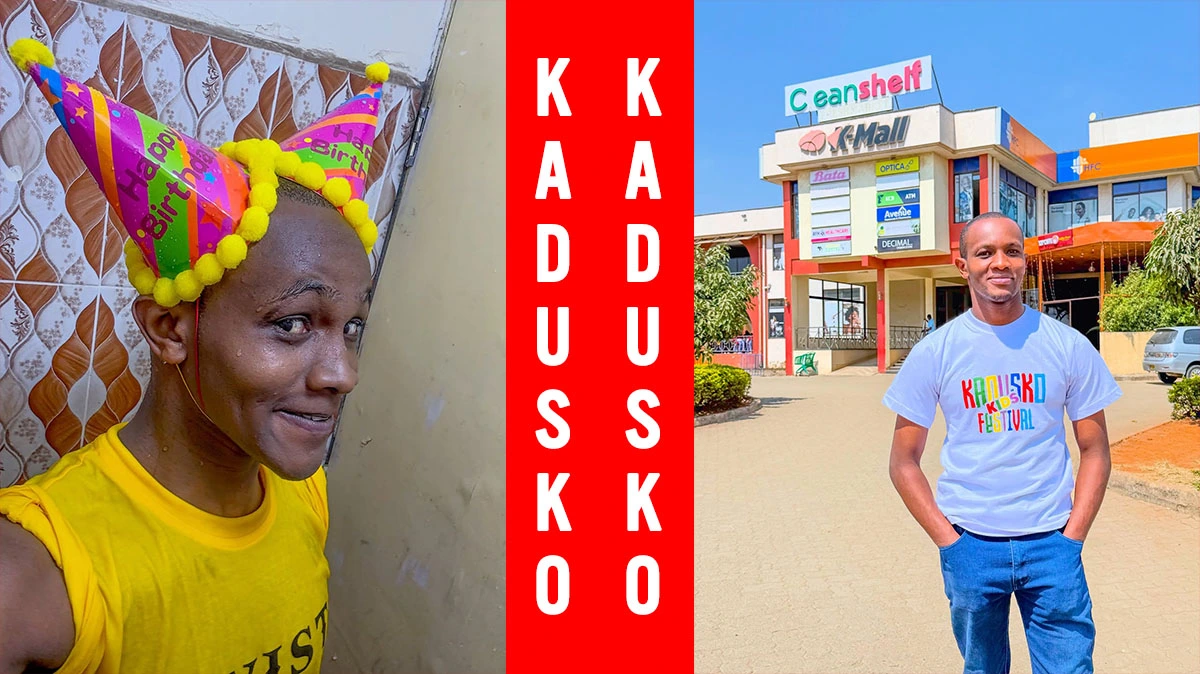
In a rapidly evolving Kenyan entertainment landscape, Kadusko is among the few names that are shining brightly.
Unlike the likes of Eric Omondi and Crazy Kennar, Kadusko’s target audience are children and teenagers.
If you’ve scrolled through TikTok, laughed through a YouTube short, or shared a Kenyan comedy meme recently, chances are one of the videos was Kadusko’s.
His rise in the comedy scene has been nothing short of remarkable. His creativity, consistency, and a deep understanding of what makes Kenyans laugh is what sets him and his team apart.
Today, Kadusko stands tall as one of the most influential young comedians in the country, and his story is one that continues to inspire thousands of hopeful creators across the nation.
From Huruma to the World: Early Life and Education
Kadusko’s real name is Edwin Wainaina. He was born in 2001 thus 25 years as of 2026. He grew up in Huruma, one of Nairobi’s most vibrant yet gritty neighborhoods that’s mostly known for its hustle, humor, and resilience.
A proud son of the Kikuyu community, Edwin attended St. Augustine, where his comedic talent was evident long before he took the stage professionally.
Teachers recall him as the student who could diffuse tension with a joke; classmates remember him as the guy who could turn any ordinary moment into something unforgettable.
At home, his lively personality brought joy to family gatherings, where he often found himself entertaining relatives without even trying. But like most self-made celebrities, his journey wasn’t smooth.
Entering Kenya’s competitive comedy space demanded persistence, innovation, and a relentless pursuit of improvement.
Kadusko dedicated hours to refining his craft by watching international comedians, analyzing local comedy formats, and gradually developing his own unique performance identity.
Building a Brand: The Rise of Kadusko Comedy
Today, Kadusko is widely known for his original, sharply scripted, and highly relatable comedic content. Instead of depending solely on slapstick humor, he mixes character-driven comedy, satire, observational jokes, and improvisation which ends up creating a format that resonates with Kenyans across all age groups.
Whether he’s mimicking everyday Nairobi frustrations, poking fun at urban survival tactics, or capturing the quirks of Kenyan relationships, Kadusko knows how to make audiences feel seen.
His skits highlight everything from public transport chaos and landlord–tenant drama to love, money, and social media madness. It’s this ability to transform the challenges of daily life into laugh-out-loud experiences that makes him stand out.
Kadusko TV: A Digital Home for Unfiltered Laughter
As entertainment continues shifting to digital platforms, Kadusko has been quick to adapt. His YouTube platform, Kadusko TV, has grown into a powerhouse where creativity meets consistency. It features:
Hilarious comedy skits capturing the realities of Kenyan life
Original stand-up comedy performances
Collaborative videos with top Kenyan entertainers
Behind-the-scenes content showcasing his production process
Creative experimental formats that keep fans hooked
Kadusko TV has become a must-watch for fans who crave high-quality digital content created with heart, humor, and cultural relevance.
Seven Years of Acting, Creating, Directing and Leading
Beyond being a comedian, Edwin is a multitalented creative force. He is a:
Content creator
Scriptwriter
Director
Actor
Entrepreneur
One of his greatest achievements is founding the Kadusko Network, a production enterprise that has already employed 17 people, he stated this while in an interview on Obinna TV.
His company, Kadusko network has had a massive contribution to the local entertainment industry. Many young creatives dream of creating jobs in the arts. Kadusko has done it by age 24.
With seven years of acting experience under his belt, his professionalism continues to set him apart from many of his peers.
Kadusko Videos: The Viral Magic Behind His Success
On TikTok, Facebook, Instagram, and YouTube, Kadusko’s videos consistently trend. His clips have a reputation for going viral due to their simplicity, authenticity, and quick-hit punchlines.
Among his most popular works are videos that spotlight the humorous side of Nairobi’s daily hustle.
A fan-favorite compilation titled “TRUTH or DARE: Men Can Do Anything When They Fall in Love” showcased his sharp storytelling and ability to tap into universal themes which has earned him massive engagement.
What’s clear is that Kadusko doesn’t just create content; he creates moments Kenyans share, quote, and laugh about for weeks.
Mastering the Art of Social Media
Kadusko’s meteoric rise wouldn’t be possible without his strategic use of social media. He has mastered the algorithm game through:
Frequent posting that keeps his audience engaged
Interaction with fans through comments and live sessions
Collaborations with influencers and fellow comedians
Leveraging trending topics and relatable scenarios
This digital awareness has earned him a loyal fanbase that not only watches his content but actively promotes it through subscription on his website.
Personal Life and Inspirations
Despite his busy career, Kadusko enjoys a vibrant personal life. He is currently dating and maintains a variety of hobbies, including swimming, traveling, watching movies, and enjoying good music.
He’s a huge fan of Kevin Hart, admiring how the American superstar blends comedy with storytelling, an art he’s also mastered.
His favorite film is the Indian blockbuster RRR, directed by S.S. Rajamouli. RRR is an action-packed epic starring N.T. Rama Rao Jr., Ram Charan, and Alia Bhatt. He appreciates the film’s emotional depth, stunning visuals, and powerful narrative on colonial resistance.
A Young Star Shaping Kenya’s Entertainment Future
At just 24, Kadusko has achieved milestones many comedians spend decades chasing. He has redefined the digital comedy space, mentored emerging creators, built a functional production company, and positioned himself among Kenya’s top comedic voices.
His journey proves that talent, consistency, and innovation can turn a dream into a national phenomenon. Whether you’re an old fan or a newcomer to his content, one thing is certain: Kadusko is just getting started.









 New 2024


 New 2025


 New 2024


 New 2025


 New 2025